Straight-line zipline
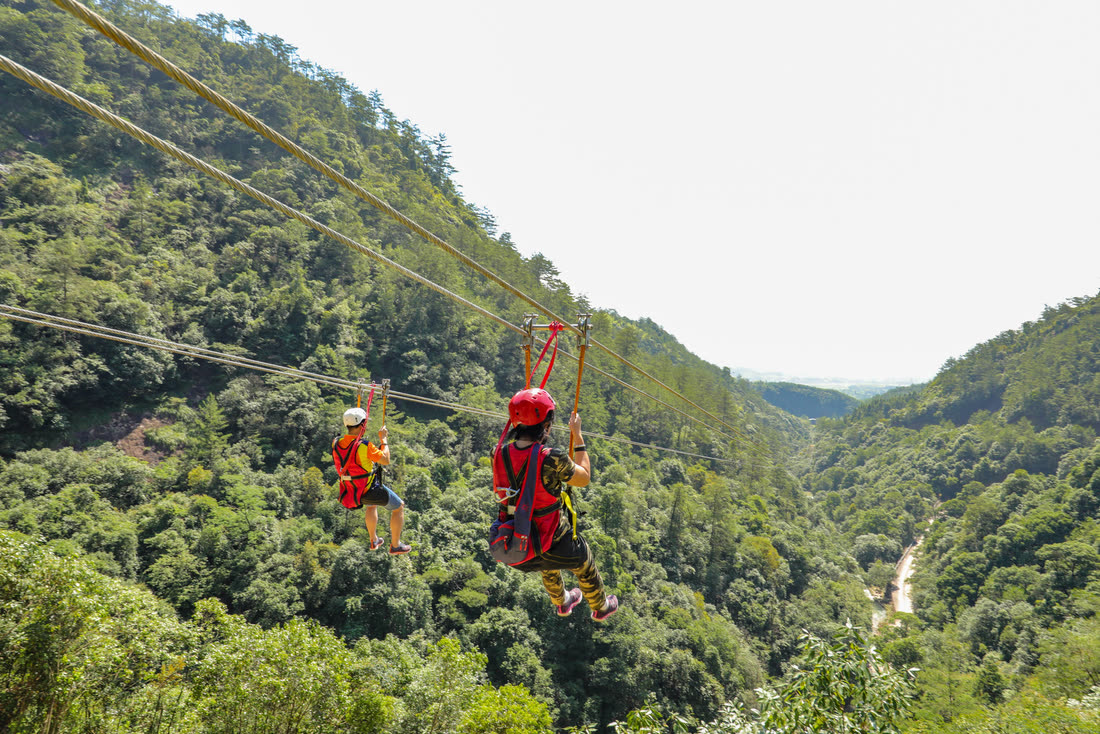
The standard product: two parallel twin-cable runs from the upper station to the lower station, ridden one person per trolley on a full-body harness. Suits valley crossings, forest canopy trails and resort slopes.
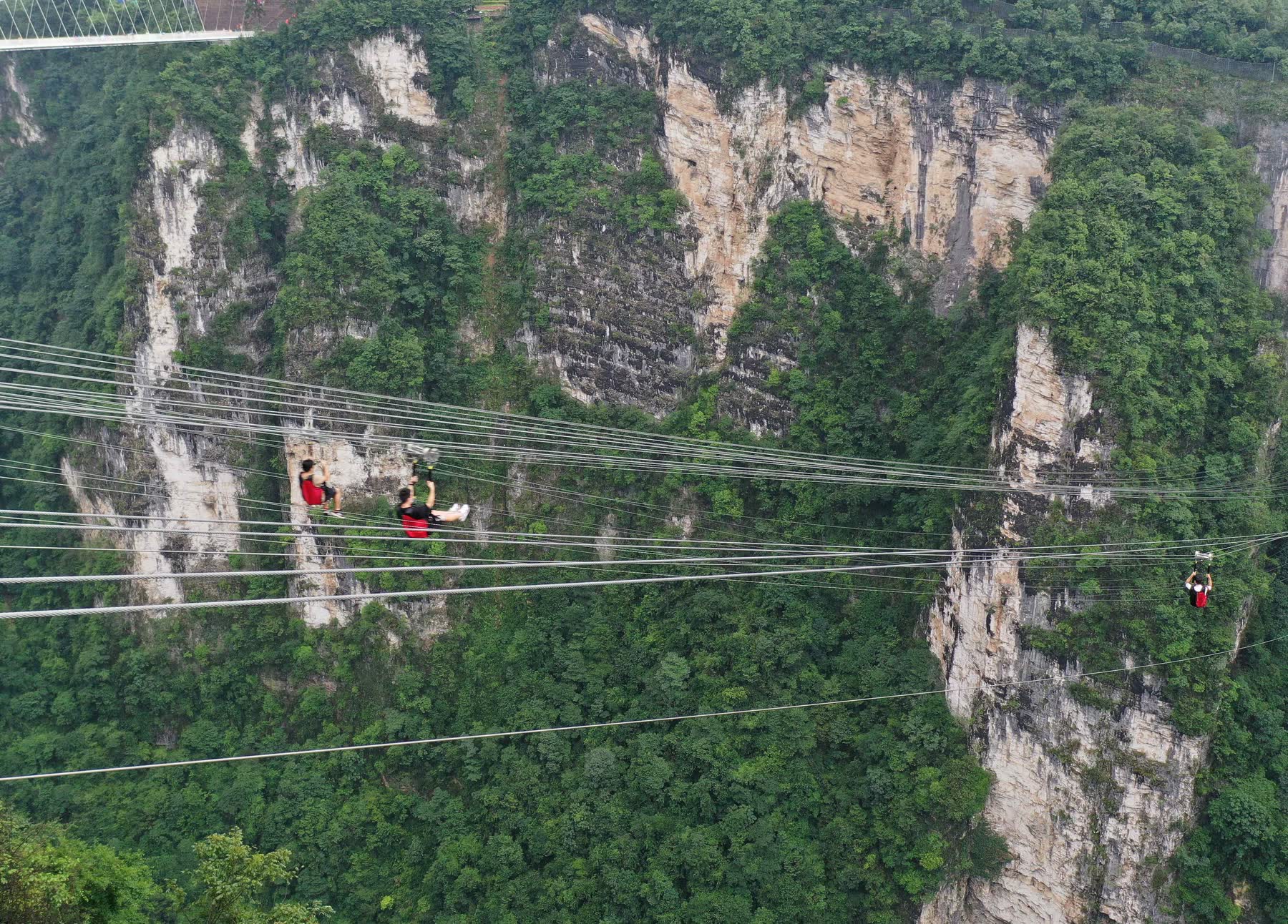
Twin-cable straight-line ziplines with trolley, full-body harness, gravity brake and buffer stop — engineered around your span, your drop and your site survey. Manufactured in Zhengzhou, China, shipped worldwide.
A zipline is a steel cable, a trolley and a brake — until the terrain decides the geometry. We size the cable, the sag and the stopping distance from your survey, not from a stock drawing.
The standard product: two parallel twin-cable runs from the upper station to the lower station, ridden one person per trolley on a full-body harness. Suits valley crossings, forest canopy trails and resort slopes.
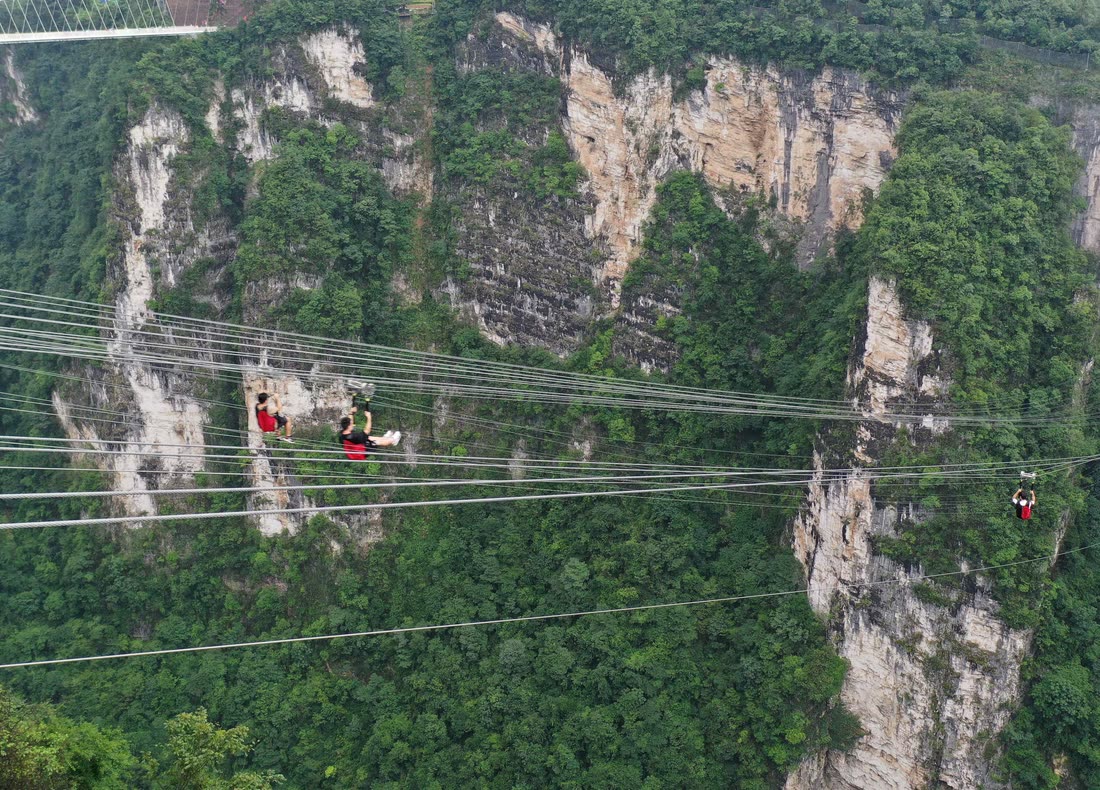
Four or more cables side by side so families and groups ride together, cutting queue time on high-traffic days. Each line is separately rated, separately braked and independently inspected.
Long crossings, low headroom, road or river clearance, unusual arrival angles — we calculate sag, tension and anchor loads from your elevation profile before any steel is cut.
Send us the elevation profile and we work backwards from physics: cable diameter and pre-tension, where the sag bottoms out, minimum ground clearance, arrival speed and the braking distance that speed demands.
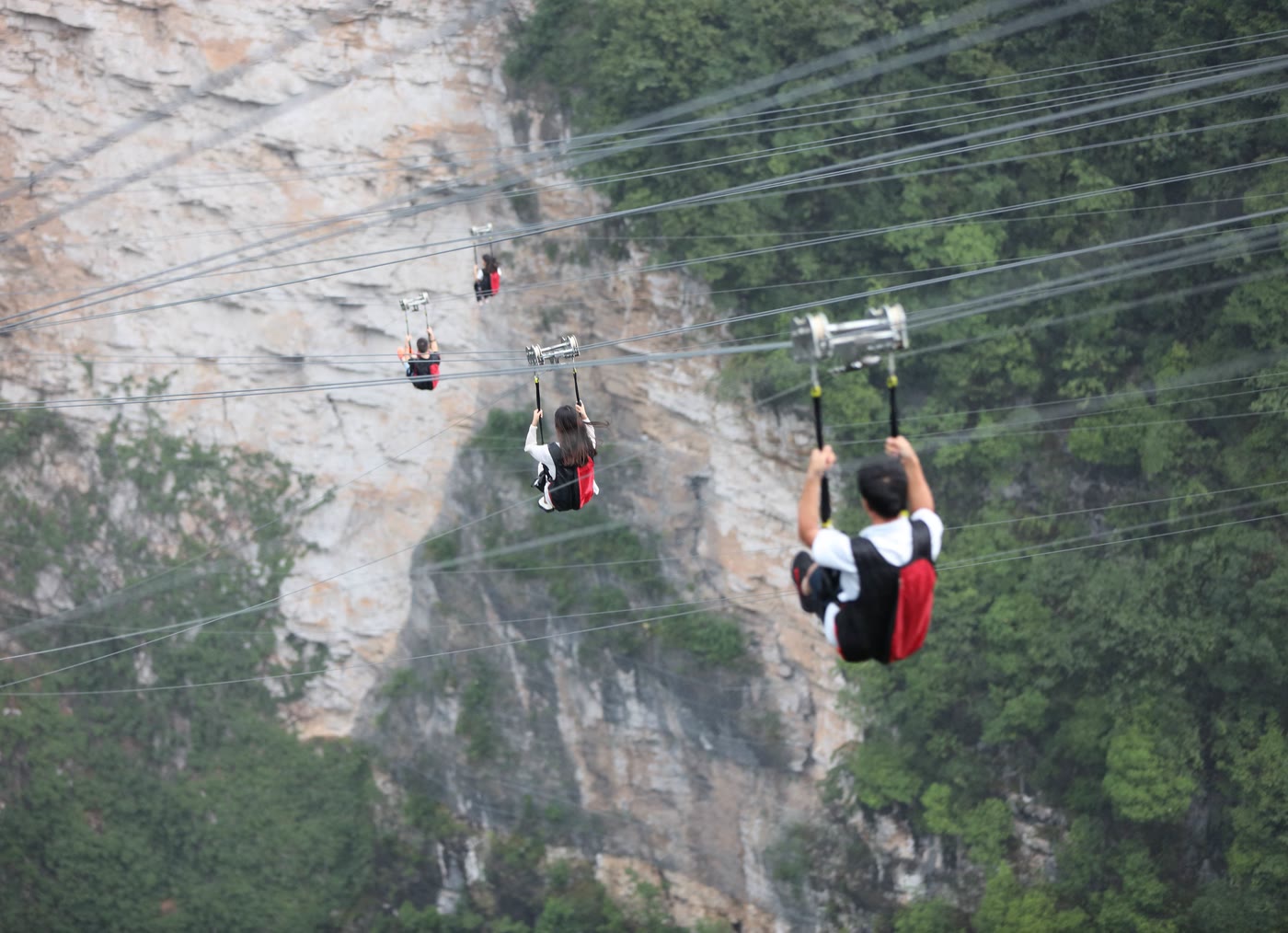
Every system leaves with the full mechanical set — not a cable you then have to source brakes and harnesses for locally.
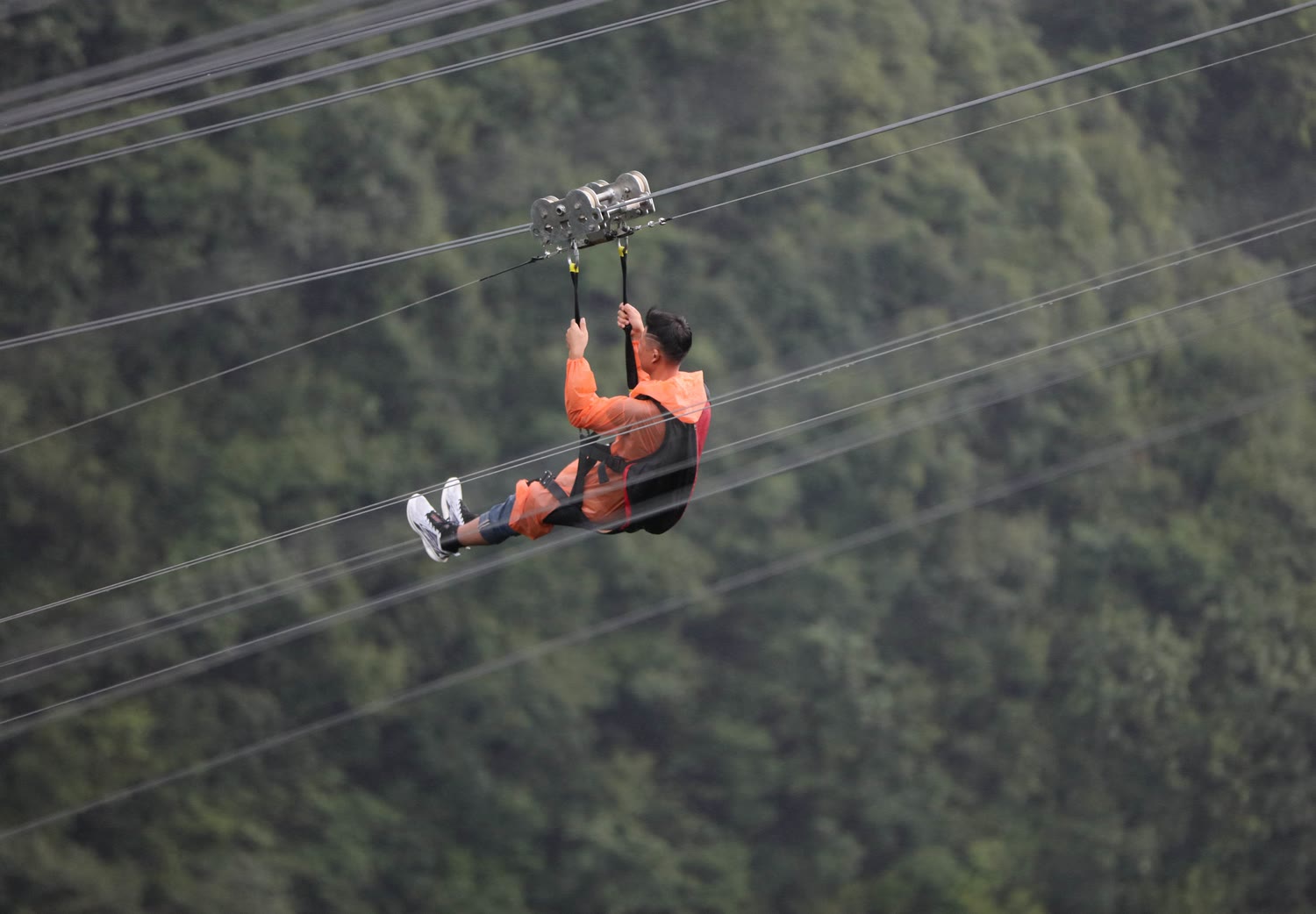
6×19W+IWR galvanised load cable with matched trolley assemblies, sized to the span and rider load.
Rubber deceleration unit that brings the trolley to a controlled stop before the buffer at the lower station.
Multi-point harness and seat sling per trolley, plus a rescue trolley so a stopped rider can be recovered.
Manual or electric winch system that returns trolleys from the lower station and serves as the recovery drive.
Full bill of materials and available options are on the components page.
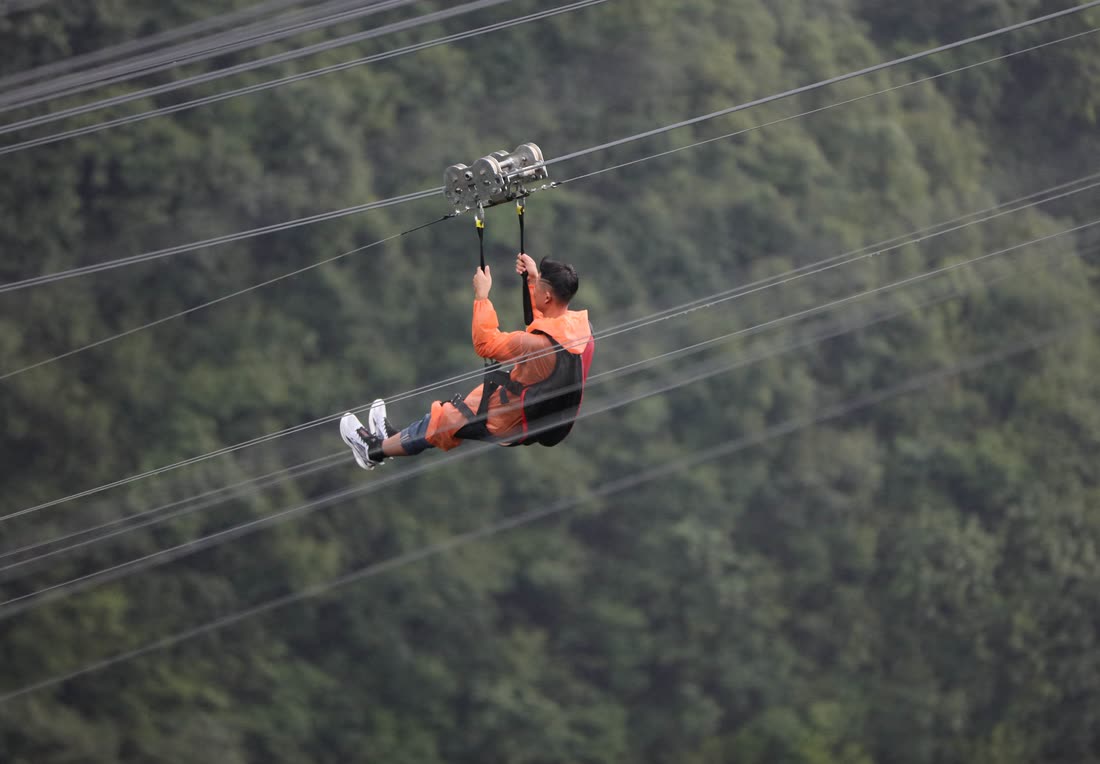
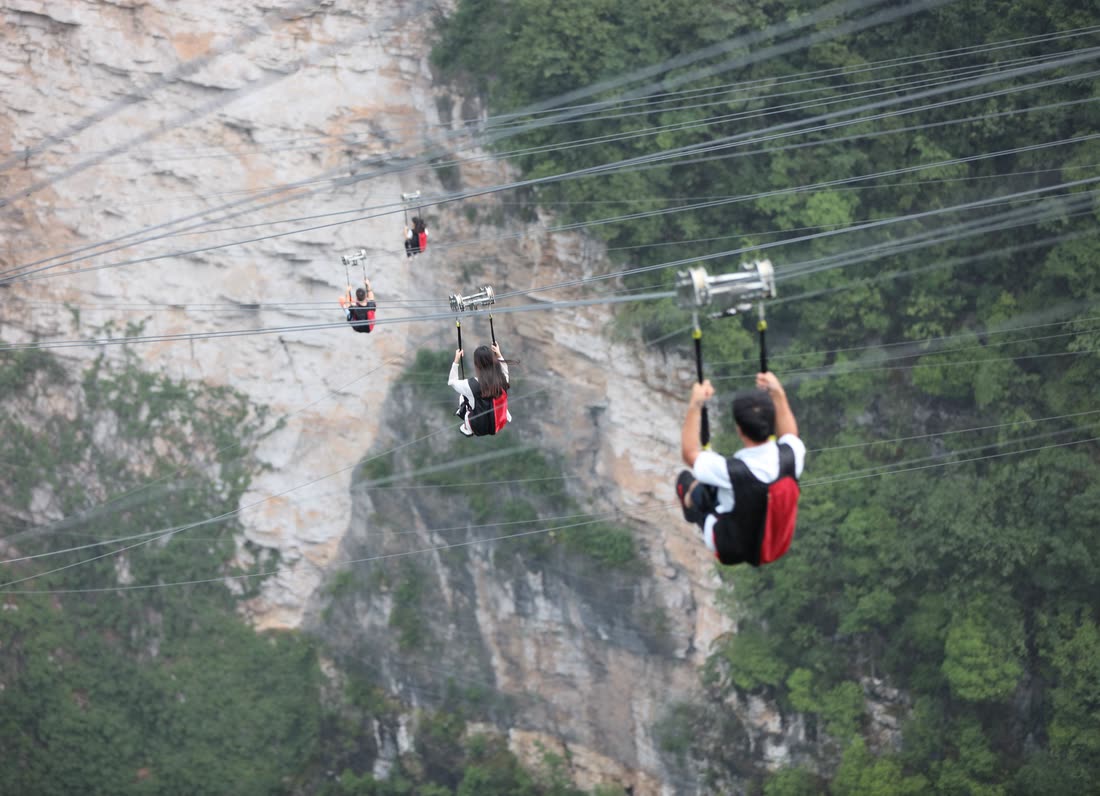
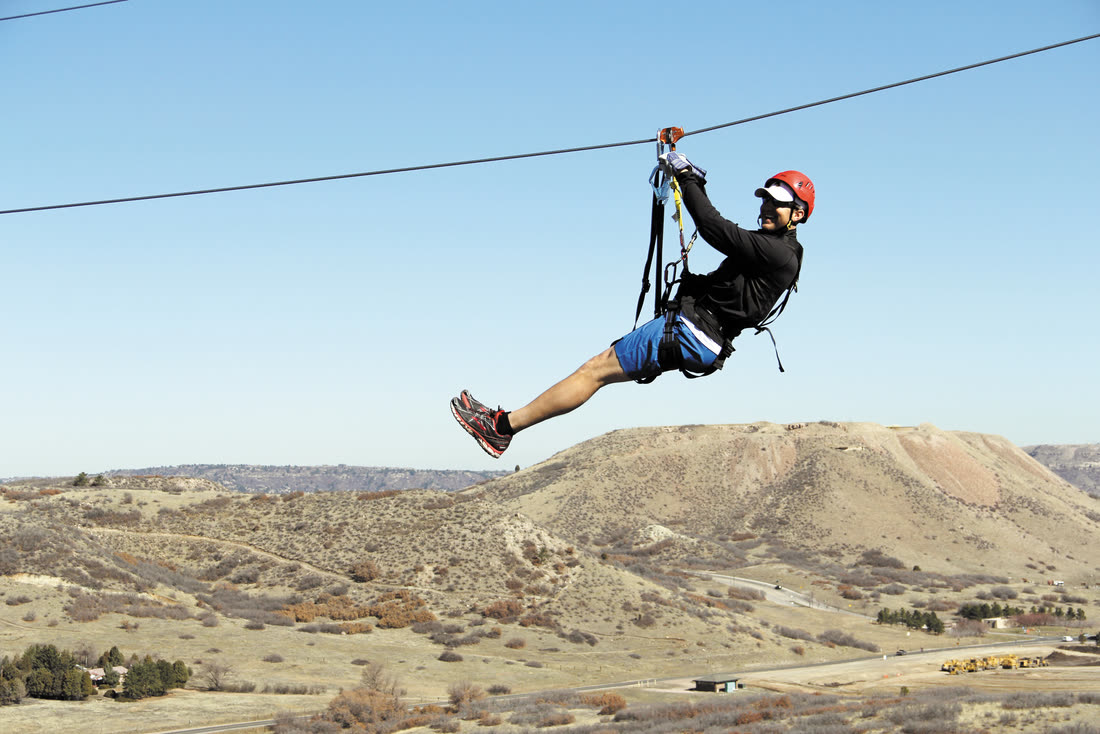
Ziplines we have supplied across canyon, forest and mountain sites. Riders are photographed at distance, so the focus stays on the line and the terrain.
Span length, upper and lower station elevation, terrain type and how many riders per hour you expect.
Cable size and tension, sag and clearance, arrival speed, braking distance and anchor loads.
Structure fabricated and galvanised, cable cut to length, hardware and harnesses packed as one shipment.
Foundation drawings and an installation sequence, plus operator training on running and daily checks.
Give us the length between stations, the elevation difference and the terrain type. We come back with the cable configuration, the hardware list and a quotation for your site.